
.jpg?width=900)
High-approval filing and profile documentation for family visits, leisure, and business travel — handled by a licensed, Patiala-based team.
Planning to visit family abroad, travel for a holiday, or attend a business meeting overseas? A visitor visa is approved on the strength of your profile and your paperwork — not on hope. As licensed tourist and visitor visa consultants based in Patiala, we prepare applications that answer a visa officer's real questions before they are asked: why you are travelling, how it is funded, and why you will return home.
Families across Patiala, Rajpura, Nabha and Sangrur come to us for one reason — a calm, honest reading of their case and documentation strong enough to stand on its own. Whether it is a Canada Super Visa for parents, a US B1/B2, a UK Standard Visitor Visa, or a Schengen short-stay, we file it properly the first time.
Most local consultancies treat the tourist visa as a side service squeezed into a single paragraph. For us it is a specialism. Here is what that means in practice.
BrainEdge has guided Punjab families through visa filing since 2011, and we operate under a Government of Punjab consultancy licence (No. 568/DC/PTA/PLA/LC-3/2022). That licence is not decoration — it means your case is handled inside a regulated, accountable practice with a real office you can walk into in City Centre, Patiala.
A refusal stamp follows you. Future applications must declare it, and it makes every subsequent visa harder. So before we file, we screen honestly. If your profile is strong, we tell you exactly how to present it. If it is weak, we tell you what to fix first — and on the rare hopeless case, we say so rather than take your fee and risk your travel record.
Your file is handled by a named, experienced counsellor at BrainEdge — not passed around a call centre.

Director, BrainEdge
15+ years of experience

Manager, BrainEdge
8+ years of experience

Senior Counsellor, BrainEdge
7+ years of experience

Counsellor, BrainEdge
6+ years of experience
Over a decade guiding Punjab families through visa filing.
Licence No. 568/DC/PTA/PLA/LC-3/2022.
Confirmation pending publication.
Walk in for in-person document screening.
Thousands of consultations across study and visitor cases.
From real, consented clients.
“Visitor visa” covers several real-world journeys. Each one is judged differently, so each one is documented differently.


A quick comparison of how the major destinations treat a visitor application. Figures are typical maximums and general rules; the exact terms depend on your profile and the visa subclass.


This is the case we are asked about most — and the one most local agents handle worst.
When your son or daughter is studying or working in Canada, Australia, the UK or the USA, you have every reason to visit — graduation, a new grandchild, simply seeing them settled. Visa officers know this is genuine, but they still need it proven: your child's status abroad, who is funding the trip, your ties back home in Punjab, and a clear intent to return.
This is exactly where the parents'-visa case is won or lost. We have prepared this filing for countless Patiala families, and we know which proofs reassure an officer and which gaps trigger a refusal. For Canada specifically, we also assess whether the longer-validity Super Visa is the better route for parents and grandparents.
Retired applicants worry that without a salary slip their case is weak. It isn't — it just rests on different proofs. Pension income, property ownership, fixed deposits and clear family ties in India can build a strong, credible profile. Where a child abroad sponsors the trip, the sponsor's documents carry much of the weight. We know how officers read a retired parent's file and assemble it so that age and retirement read as stability, not as a risk.
Plenty of strong applicants get refused simply because it is their first trip and no one explained how to present a clean first-time profile. A blank passport is not a problem on its own — an unexplained one is.
We regularly file successful first applications for first passport holders, homemakers, retired applicants, self-employed business owners and young professionals from across the Patiala region. The key is showing genuine purpose, honest funds, and real ties to India, so that “no travel history” never becomes “no credibility.”

Every country reads a visitor application through its own rules, its own forms, and its own idea of a credible traveller. Below is how we approach each destination from Patiala — and for our highest-volume countries, a dedicated page carries the full step-by-step process.

Our deepest visitor specialism — TRV and the parents/grandparents Super Visa.
Canada is our deepest visitor specialism, covering the standard Temporary Resident Visa (TRV) for short visits and the parents-and-grandparents Super Visa with its multi-year validity, income thresholds and mandatory medical insurance. For Punjab families, the decisive factors are usually a clean funds trail and a convincing answer to why you will return — especially when a child is already studying or working in Canada. We map your IRCC online application carefully, align your purpose of travel with your sponsor's status, and decide whether a TRV or the longer Super Visa is genuinely the better route for your case.

Overcoming a high baseline refusal rate with strong, consistent intent-to-return evidence.
Securing a US B1/B2 visa in the Punjab market requires overcoming a high baseline refusal rate by proving strong intent to return. Our Patiala consulting team focuses intensely on DS-160 form accuracy — ensuring your declared employment profile matches your verifiable tax history. We conduct realistic mock interview prep at our City Centre, Patiala office to prepare you for the consular officers at the US Embassy or Consulate, focusing heavily on clear verbal articulation of your travel itinerary and financial self-sufficiency.

A paper-decided application where documentation architecture is everything.
UK tourist visa applications are decided entirely on paper, making documentation architecture critical. We systematically structure your UK visa file to address the strict guidelines of UK Visas and Immigration (UKVI). This includes verifying your sponsor's accommodation capacity in the UK, cross-referencing bank statements with salary slips to eliminate ‘unexplained cash deposits,’ and drafting explicit, timeline-backed cover letters that define the exact purpose of short-term family or leisure visits.

Verifiable proof of funds and deep ties to Patiala, filed through ImmiAccount.
Filing for an Australian Subclass 600 visa under the Tourist or Sponsored Family stream requires verifiable proof of funds and deep ties to Patiala. Our profile optimization focuses on presenting clean asset portfolios, including Chartered Accountant (CA) net-worth certificates, agricultural land valuation reports, and running business registrations. We ensure your online ImmiAccount submission is fully mapped with compliant travel histories to lower the risk of additional document requests or unexpected timelines.

One of the most documentation-strict categories — up to 90 days across most of Europe.
A single Schengen short-stay ‘C’ visa opens most of Europe for up to 90 days within any 180-day period, but it is also one of the most documentation-strict categories. German and other Schengen missions scrutinise travel medical insurance with the correct coverage, a confirmed day-by-day itinerary, accommodation proof for every leg, and a clear main destination that decides which consulate you apply to. We assemble a coherent, contradiction-free Schengen file so a tightly defined holiday or family visit reads as exactly that — and align your funds proof with the duration of stay.
 🌏
🌏The same documentation discipline, filed directly from Patiala.
For destinations without a dedicated page, we file directly from Patiala with the same documentation discipline. New Zealand visitor visas turn on genuine-visit intent and a clean funds trail, and are generally decided within a few weeks. Singapore tourist visas are short-stay leisure or family visits with modest funds proof and fast processing through the authorised channel. Ireland's short-stay ‘C’ visa allows up to 90 days for tourism or family visits, with clear funds and accommodation evidence. Japan's temporary-visitor visa rests heavily on a precise itinerary and funds proof, with sponsorship common for family visits. In each case we audit the file fully before submission so a smaller, less familiar consulate has no reason to hesitate.
Processing times move with season, application volume and how complete your file is. The ranges below are typical, not guarantees — a well-prepared application filed early is the surest way to avoid delay.
Across Punjab, the number-one reason a visitor visa is refused is not a bad reason to travel — it is weak or inconsistent financial proof. This is where careful preparation changes the outcome.
The cover letter is your case in one page: who you are, why you are travelling, how long you will stay, who is paying, and why you will return. A vague letter invites doubt; a precise, honest one frames every other document. We draft this with you, not for show — it has to match your real circumstances.
Officers look for money that is genuinely yours and reasonably explained — consistent bank statements, ITRs that match your stated income, and where relevant, property or asset valuations. Sudden large deposits without a trail are a classic red flag; we help you assemble funds proof that reads as stable, not staged.
If your bank statement shows a recent large cash deposit, leaving it unexplained is an automatic ground for refusal under ‘unexplained source of funds’. We resolve this by appending official proof of origin directly to your file — such as verified property sale deeds, matured fixed deposit liquidation receipts, or official agricultural sale summaries. If the funds cannot be cleanly traced, we advise delaying your submission until the account history shows stable, mature balances over a rolling 3-to-6-month period.
If you fund the trip yourself, your own income and savings carry the case. If a relative abroad sponsors you, the burden shifts to their documents: status, income, and a commitment to support your visit. Mixing the two carelessly weakens both. We decide the cleaner strategy for your profile and document it accordingly.
An invitation letter from your host abroad must align with their immigration status and their own paperwork. When the invitation, the sponsor's funds, and your purpose of travel all tell the same story, the application becomes hard to refuse. We check that alignment before you file.
Most visitor visas now require biometrics at a VFS Global centre — for Patiala applicants, that usually means a trip to Chandigarh or Delhi. We brief you on what to carry, how the appointment runs, and how to schedule it so a single avoidable error doesn't cost you a wasted journey.
Use this as a working checklist. The exact set depends on the country and your profile — we issue a personalised version after your evaluation.
This is the question almost every applicant asks first — and there is no single right number. Visa officers do not check your balance against a fixed figure; they judge whether your funds are sufficient, genuine and consistent with your plan. Five factors move that judgement:
Because these factors interact, we advise a realistic funds range for your specific profile rather than a misleading one-size figure — and we make sure every rupee in your statements is traceable and stable, not parked just before applying.
Self-employed applicants are often judged more strictly than salaried ones, because their income looks less predictable on paper. Done right, a business profile is actually one of the strongest cases for return intent — a running enterprise is a powerful reason to come home.
We build that case on documents officers trust: registered GST returns that show genuine turnover, firm or shop registration proving the business is real and established, current account statements that demonstrate steady cash flow rather than one-off deposits, and evidence of business continuity — staff, premises, ongoing contracts or seasonal cycles — that shows the enterprise needs you back. For directors and partners, we align personal and business funds so the two stories reinforce rather than contradict each other.
Agricultural income is genuine and substantial across Punjab, but it rarely arrives as neat monthly salary slips — which is exactly where many farming families get refused. The fix is documenting agricultural earnings in a form officers recognise.
We work with J-Forms (Form J) that record mandi sale proceeds, matched against bank credits to create a clean, traceable income trail. Land ownership records and formal valuation certificates establish your assets and your roots in India, and where a child abroad funds the trip, we structure the sponsor's documents alongside your agricultural profile. Presented properly, a landholding family's ties to Punjab — owned land, standing crops, family responsibilities — become one of the most convincing return-intent profiles an officer can see.

Almost every visitor refusal comes down to one unspoken question in the officer's mind: will this person go home? Strong “ties to India” are how you answer it before it is asked. This is the factor applicants most often underestimate — and the one we prepare most carefully.
Officers weigh a combination of signals rather than any single document:
We help you identify which of these you already have and present them so they are obvious to an officer skimming your file in minutes.
Most refusals are avoidable. These are the errors we see most often from applicants who filed alone or with an inexperienced agent:
A refusal is not the end of the road — but reapplying without understanding why you were refused almost always fails again.
Most refusals trace back to a short list: insufficient or unexplained funds, weak ties to India, an unclear purpose of travel, inconsistent documents, or a sponsorship that doesn't hold up. The refusal letter usually names the category — reading it correctly is the first step to fixing it.
Identify the exact ground(s) cited.
Funds, ties, purpose, or documentation.
With new, verifiable evidence.
In a fresh cover letter.
Only when the case is genuinely stronger.
An honest read of your case, destination and real chances.
A personalised list covering funds, invitation, itinerary and cover letter.
We assemble and screen every document, then guide you through biometrics/VFS.
Submission, tracking, and clear guidance through to the decision.
Real, consented client feedback from recent approvals — watch the video or read the review, straight from the client.
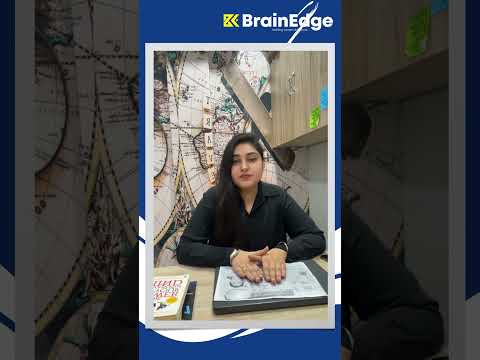
UK Visitor Visa Approved: Learn how BrainEdge helped Malika get her UK Visitor Visa despite a low annual income to visit her sister's convocation.
Malika
Video & Written Review — Verified Client

We successfully received our Canada Visitor Visa thanks to BrainEdge. Their professional guidance and seamless support made our visa journey a success.
Varinder Singh Josan & Kawaljit Kaur
Video & Written Review — Verified Client
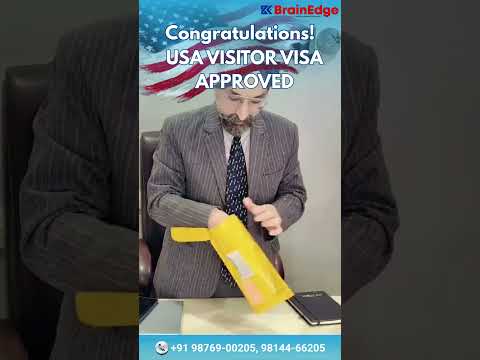
I got my USA Visitor Visa approved with the expert assistance of BrainEdge. Their dedicated guidance and seamless support made my visa journey a success.
Rajwant Kaur
Video & Written Review — Verified Client
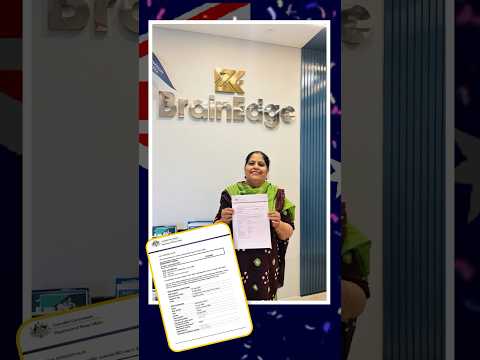
I got my Australia Visitor Visa approved in just 20 days with BrainEdge. Their expert guidance and hassle-free support made my visa journey smooth and successful.
Narinder Kaur
Video & Written Review — Verified Client


We got our New Zealand Tourist Visa approved with BrainEdge's expert support. Their dedicated team guided our family through every step of the process with confidence.
Moksh Hora
Video & Written Review — Verified Client
Based near Leela Bhawan at City Centre, our Patiala office serves as a central hub for document verification across the wider district. We provide easily accessible, in-person file screening for families traveling from neighboring areas, including Nabha, Rajpura, Sangrur, and Samana. Because most major consulates require biometric collection at the VFS Global centers in Chandigarh or Delhi, our team ensures your paperwork, financial records, and appointment letters are completely audited before you make that journey. This approach helps prevent costly errors or missed biometric slots for applicants coming from outlying regions like Fatehgarh Sahib, Sirhind, Malerkotla, and Banur.
Core documents are a passport, completed application, proof of funds (bank statements and ITRs), a cover letter, travel itinerary, and — if applicable — an invitation letter and sponsor documents. The exact list varies by country and profile, so we issue a personalised checklist after evaluating your case.
Yes — if you do not have regular Income Tax Returns (ITRs), we build alternative verification paths. For agricultural backgrounds common across Punjab, we utilise Form J (J-Forms) coupled with certified crop-income bank trails and formal land valuation certificates. For retail business owners operating without audited filings, we substitute registered GST returns, local trade licenses, and formal current account cash-flow statements to establish your true financial standing.
There is no single fixed figure — officers want funds that comfortably cover your trip and look genuinely yours, backed by consistent statements and ITRs. The amount depends on destination, trip length, and whether you are sponsored or self-funded. We advise a realistic range for your profile rather than a guessed number.
Canada does not publish a fixed minimum; officers assess whether your funds realistically cover the visit alongside your ties and purpose. For a Super Visa, separate income thresholds and medical insurance apply. We map the right funds range for your specific Canada case.
Common grounds are weak funds, unclear purpose, doubts about returning home, or inconsistent documents. Yes, you can reapply — but only after identifying and fixing the actual reason cited in your refusal letter. Resubmitting the same file usually fails again.
They improve significantly when the original weakness is genuinely fixed, and stay low if you simply refile the same application. The honest answer depends on what the refusal letter cited and what has changed since. We give a candid assessment before you spend another fee.
Neither is universally better — it depends on whose documents are stronger. Self-funding suits applicants with solid income and savings; sponsorship suits those with a well-documented relative abroad. What hurts cases is mixing the two carelessly. We pick the cleaner route for you.
Yes — this is one of the most genuine, common cases. You show your child's status abroad, who funds the trip, your ties home, and intent to return. Retired parents can rely on pension, property and family ties; for Canada, the Super Visa may suit parents and grandparents.
Yes. A parent visiting a studying child is a well-recognised genuine purpose. The key proofs are your child's enrolment and status, who is paying, and your ties back in India. We prepare this filing regularly for Patiala families.
Yes. You can complete the application and DS-160 from Patiala; the consular interview is scheduled at a US mission in India. We prepare your documents and interview readiness so you travel for the interview fully prepared.
Times vary by country and season, from a few days to several weeks. Biometrics appointments and document readiness affect the timeline. We help you file early and correctly so avoidable delays don't push back your travel dates.
Most visitor visas now require biometrics at a VFS Global centre, usually Chandigarh or Delhi for Patiala applicants. We brief you on what to carry and how the appointment runs so it is a single, smooth visit.
Our City Centre, Patiala office serves Patiala city and nearby towns including Rajpura, Nabha, Sangrur, Samana, Sirhind, Fatehgarh Sahib, Dhuri, Malerkotla and Banur, with in-person document screening. Clients elsewhere can complete the same process online or by phone.
No honest consultant can guarantee a visa — the decision rests with the visa officer. What we guarantee is an honest assessment of your chances and the strongest, most accurate application your profile allows. If a case is genuinely hopeless, we tell you.
A standard Visitor Visa (TRV) is for short visits, usually up to six months per entry. The Super Visa is specifically for parents and grandparents of Canadian citizens or permanent residents — it allows stays of up to five years at a time over a multi-year, multiple-entry validity, but requires meeting income thresholds and holding valid medical insurance. We assess which route fits your case.
For most applicants from India, yes — an in-person interview at a US Embassy or Consulate is a standard part of the B1/B2 process, though limited waiver categories exist. Because the decision rests heavily on that interview, we run realistic mock interview preparation so you can articulate your purpose, ties and funds clearly and consistently.
Yes. Visiting family or friends is a core permitted purpose of the UK Standard Visitor Visa, alongside tourism and short business trips. The application is decided on documents, so we focus on proving your relationship, your accommodation arrangements, and a funds trail free of unexplained deposits.
Core documents include a valid passport, proof of funds (bank statements, ITRs, and often a CA net-worth certificate), evidence of ties to India such as land or business ownership, a clear travel purpose, and — for the Sponsored Family stream — your sponsor's documents. Everything is lodged online through ImmiAccount. We issue a personalised checklist for your stream.
You apply through the country that is your main destination — where you will spend the most time. If the stay is split evenly across several Schengen countries, you apply through the country you enter first. Applying through the wrong consulate is a common cause of delay or refusal, so we confirm the correct one before you file.