 #1
Russell Group
#1
Russell Group
600+
Students Placed by BrainEdge
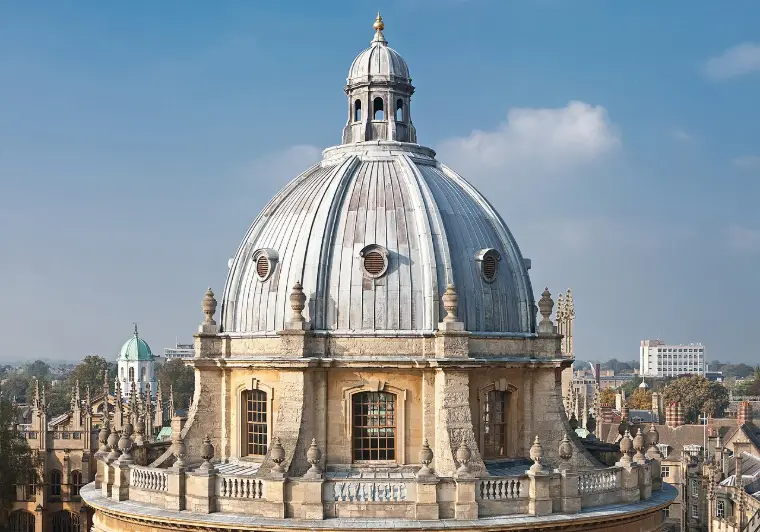
6-Year MBBSUniversity of Oxford
Joint medical school & NHS teaching hospitals
Studying Medicine in the UK is a longer and more expensive commitment than most other subjects on this site, and it comes with its own registration chain — so it deserves a closer look before you apply.
The standard route is a 5-year undergraduate MBBS/MBChB, delivered jointly by a medical school and NHS teaching hospitals, so clinical placements begin within the degree itself rather than after it. A small number of universities offer accelerated 4-year graduate-entry programmes for students who already hold a science degree.
5–6 Yrs
Course Length
90%+
Typical Class 12 Aggregate
UCAT
Admissions Test Used
£36k–£58k
Indicative Fee Range
Medical school is the most competitive undergraduate admission on this site — UK universities weigh academics, the UCAT, your personal statement and (often) clinical work experience together, not academics alone.
NEET is an Indian regulatory requirement, not a UK admissions one — it is not needed to be admitted to a UK MBBS programme. It becomes relevant only if and when the graduate wants to register to practise medicine in India, described in the registration pathway below.
A UK MBBS and an Indian MBBS work as two separate, one-directional recognitions rather than an automatic equivalence. Here is what a UK-trained graduate needs to do to practise in each country.
Complete the UK MBBS/MBChB degree
The standard 5–6 year undergraduate route, or a 4-year accelerated graduate-entry programme.
Obtain General Medical Council (GMC) registration
Required to practise medicine anywhere in the UK, including the foundation training year.
To practise in India, sit the National Exit Test (NExT)
This is the mechanism by which the National Medical Commission currently assesses foreign medical graduates, including those trained in the UK. This exam has been phased and revised, so reconfirm the exact current name/process closer to your graduation date.
Obtain National Medical Commission (NMC-India) registration
The final step before practising medicine in India.
Approximate conversion used on this page: £1 ≈ ₹129.6 (indicative rate; the exact rate at the time you pay will vary with the market).
University
City
Course Length
Indicative Fees (GBP/year)
University of Oxford
Oxford
6 years
£45,000 – £55,000
University of Cambridge
Cambridge
6 years
£45,000 – £55,000
Imperial College London
London
6 years
£48,000 – £58,000
UCL
London
6 years
£42,000 – £52,000
University of Edinburgh
Edinburgh
6 years
£38,000 – £48,000
University of Manchester
Manchester
5 years
£36,000 – £46,000
Fee ranges above are indicative 2026/27 estimates compiled for planning purposes — always confirm the exact, current-year figure on the university's own admissions page before budgeting or applying. MBBS fees also vary between pre-clinical and clinical years at several universities — always check the year-by-year breakdown on the university's fee page.
Oxford, Cambridge and Imperial are consistently the highest-fee, highest-reputation MBBS providers for international students — the fuller table above covers six universities in total.
#1
Russell Group #2
Russell Group
#2
Russell Group #3
Russell Group
#3
Russell GroupUndergraduate Medicine applications go through UCAS, and medical school deadlines are earlier than most other undergraduate courses — start your UCAT preparation and shortlist well ahead of time.
Prepare for the UCAT (12–18 months prior)
Register for and sit the University Clinical Aptitude Test before UCAS applications open, since most medical schools require a UCAT score before they will consider your application.
Research and shortlist (12–18 months prior)
Identify programmes, confirm entry requirements, and prepare for any required entrance test.
Prepare documents (8–12 months prior)
Draft your Statement of Purpose, request references, and update your CV.
Submit your application
Most UK medical universities accept MBBS applications through UCAS (Universities and Colleges Admissions Service). However, some universities may accept direct applications after the UCAS application deadline, subject to availability and their individual admission policies.
Receive your offer
A conditional offer (subject to meeting final academic or test conditions) or an unconditional offer.
Accept and pay your deposit
Accepting your offer and paying any tuition deposit triggers your Confirmation of Acceptance for Studies (CAS) — the document you need for your visa application.
Apply for your Student visa
Using your CAS reference. See our dedicated UK Visa Consultants page for the full process.
Researching Medicine (MBBS) in the UK is only half the job — getting your profile, documents and visa filing right is what actually gets you there. Here's what working with BrainEdge adds to everything covered on this page.
Govt. of Punjab Licensed
Licence No. 568/DC/PTA/PLA/LC-3/2022 — a regulated, accountable consultancy, not an unlicensed agent.
15+ Years, Since 2011
Over a decade guiding Indian students through UK university admissions and visas.
600+ Students Placed in the UK
Real placements across Medicine, Law, Business, Healthcare, Computer Science and more.
Named Counselling Team
Your file is handled by an experienced, named counsellor — not passed around a call centre.
Physical Office in Patiala
Walk in for in-person profile and document screening at our City Centre office.
Visa Filing Included, Not a Handoff
Once you have an offer, the same team carries you through your CAS and UK Student visa filing.
Confused Between Courses or Universities?
If you're unsure which course or university best fits your academic profile, budget and career goals, our counsellors give you a personalised recommendation — not a generic list.
No. NEET is an Indian regulatory requirement, not part of UK medical school admissions. It only becomes relevant later, if you want to register to practise medicine in India after your UK degree.
Yes, if you want to practise medicine in India. The National Exit Test (NExT) is currently the mechanism the National Medical Commission uses to assess foreign medical graduates, including those trained in the UK. Since this exam has been revised over time, reconfirm the current process closer to your graduation.
The BMAT has been discontinued by its administering body. The University Clinical Aptitude Test (UCAT) is now used by nearly all UK medical schools for admissions screening — check your specific target universities, as a small number may use a school-specific alternative test.
A small number of universities offer accelerated graduate-entry programmes, but these are typically only open to applicants who already hold a science degree.
If you're ready to move from research to action, here are three low-commitment ways to get personalised help with your MBBS application.
Tell us your subject, intake and budget. A BrainEdge counsellor will follow up on WhatsApp within 24 hours.
Get ShortlistSee admissions, visa, cost calculator and scholarships for every subject in one place.
Open Full Guide600+
Students Placed in UK
15+
Years Experience
50+
Partner Universities